Former Henry County Commissioner passes away
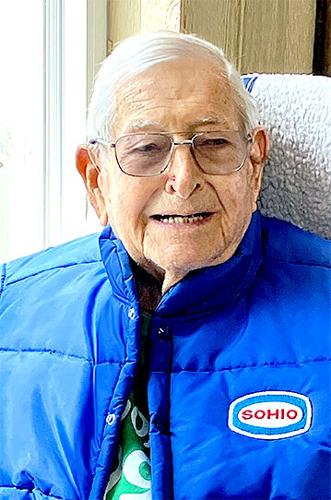 |
Last week, former Henry County Commissioner Wayne Phillips, Sr., passed away at the age of 100.
Wayne served in the US Army during World War II. He founded Phillips Oil Company and owned and operated Phillips Pheasant Ranch.
In addition to serving as a Deshler Village Councilman, he also served as a Henry County Commissioner, from 1973 to 1990. He was appointed to the office after his brother, Chester Phillips, suffered a heart attack shortly after his own election in 1972.
In July, shortly before Wayne's 100th birthday, Senator Jon Husted read him into the Congressional Record (beginning in the middle-column of page 3).
You can read Wayne's full obituary here.
|
Nominations for CCAO Board of Directors open
The CCAO Code of Regulations provides that the Board of Directors is composed of up to 35 members: 5 officers, 15 elected board members, 9 members appointed by the president, and the 6 most recent past presidents who still hold the office of county commissioner, county executive, or county council.
The Code of Regulations specifies that to be eligible to be nominated as an officer, an individual must be from a member county and have served a term of at least one year on the CCAO Board of Directors. In addition, the Code of Regulations limits the number of consecutive years a person can serve either as Treasurer (not more than two consecutive one-year terms) or Secretary (not more than two consecutive one-year terms). Also, people serving in the offices of Treasurer and Secretary must be of different political parties.
Under the Code of Regulations, it is assumed that the Nominating Committee will nominate the then-sitting Second Vice President for the office of First Vice President, and the then-sitting First Vice President for the office of President. (The CCAO President may serve more than one year as long as the years are not consecutive.)
Furthermore, in the Nominating Committee process candidates are sought for the Second Vice President position. The person receiving the highest number of votes at the election conducted during the annual business meeting will be elected to the office of Second Vice President.
Additionally, nominations for these offices may be made from the floor at the annual meeting in accordance with the bylaws.
The seven members whose two-year terms on the Board expire this year include: Sabrina Christian-Bennett (Portage), Dick Gould (Greene), Steven Hess (Champaign), John O’Grady (Franklin), Amy Norris (Harrison), Carolyn Rice (Montgomery) and Wade Westfall (Miami).
The CCAO Code of Regulations provides the six most recent past presidents who still hold the office of county commissioner, executive, or county council and who elect to serve as a member on the Board of Directors, may have a seat on the Board. In 2027 those individuals will include: Denise Driehaus (Hamilton), David Painter (Clermont), Glenn Miller (Henry), Tim Bubb (Licking), and Mike Halleck (Columbiana).
The CCAO Board of Directors typically meets nine times a year, and attendance and participation are vital. While there are circumstances where an individual cannot attend a meeting, this should not be the norm. I must stress the fact that we need people who are committed to attending and engaging in a majority of the meetings.
The Nominating Committee Report will be published on the web at www.ccao.org November 23. The Business Meeting for election of officers and board members is scheduled for Thursday, December 10, 2026.
If you are interested in serving on the Board for a two-year term or as a past president or as an officer, please complete the attached Nominating Committee Form, or follow this link to an electronic form, along with the candidate questionnaire. Both forms must be returned no later than November 1, 2026, to the committee chair: Glenn Miller, 2408 Ken James Court, Napoleon, OH 43545, or by email at glenn.miller@henrycountyohio.gov.
In addition, mail copies to CCAO, 209 E. State Street, Columbus, OH 43215-4309, in an envelope marked: NOMINATING COMMITTEE – ATTENTION: Robin Garrett, or you may email your forms to rgarrett@ccao.org.
You can request consideration for more than one office. Also note that if you request to serve on the Board for a two-year term and/or as an officer and are not nominated, your name will automatically be submitted for consideration of a Presidential Appointment to the Board of Directors.
If you have any questions, feel free to contact Chair Glenn Miller at (419) 779-0020, or call CCAO Executive Director Cheryl Subler at (614) 746-8507.
CCAO webinar announcements: Power Siting & AI Permitting
CCAO is announcing two webinars that the Association will be hosting later in October. The first, on October 22, will provide counties with information about the role that local governments can play in power siting, both as siting authorities themselves and as interveners before the Power Siting Board.
The second, on October 27, will feature Alynea and give practical examples of how AI can streamline the permitting process.
Local Government Involvement in Power Siting
Thursday, October 22, at 2:00 p.m.
Presenter: Dale Arnold, Director, Energy Development, Ohio Farm Bureau Federation
Local governments across the state are dealing with the topic of Energy Development and being asked what locals entities involvement can be. In the is webinar, Dale Arnold, from Ohio Farm Bureau will speak about what local government jurisdiction, the permitting process and timelines. As this remains an important topic for local governments we hope you are able to participate in this upcoming webinar.
Register Here!
Using AI to Improve Permit Application Quality
Thursday, October 22, at 2:00 p.m.
Presenter: Alynea staff
In this webinar you will hear from the team at Alynea, who work with local governments across the country to develop AI solutions that assist with complex permitting processes. The Alynea team will educate attendees on how AI can be implemented safely within your existing permitting structure and the benefits of adopting AI for both applicants and staff. They will also conduct a brief demonstration of their products and answer attendee questions.
Register Here!
OCCO hosting Legislative Reception on November 10
On November 10, the Ohio Council of County Officials (OCCO) is hosting its annual Legislative Reception in the Statehouse Atrium from 5:00 p.m. to 7:00 p.m.
Registration is no cost and is available on the Ohio Clerks of Courts Association's website.
Register Here
The event is a great way for CCAO members to network and discuss issues facing your counties with legislators and colleagues from around the state.
Photos from the 2025 OCCO Legislative Reception are available on our Facebook page.
| 2025 OCCO Legislative Reception Photos |
 |
 |
|
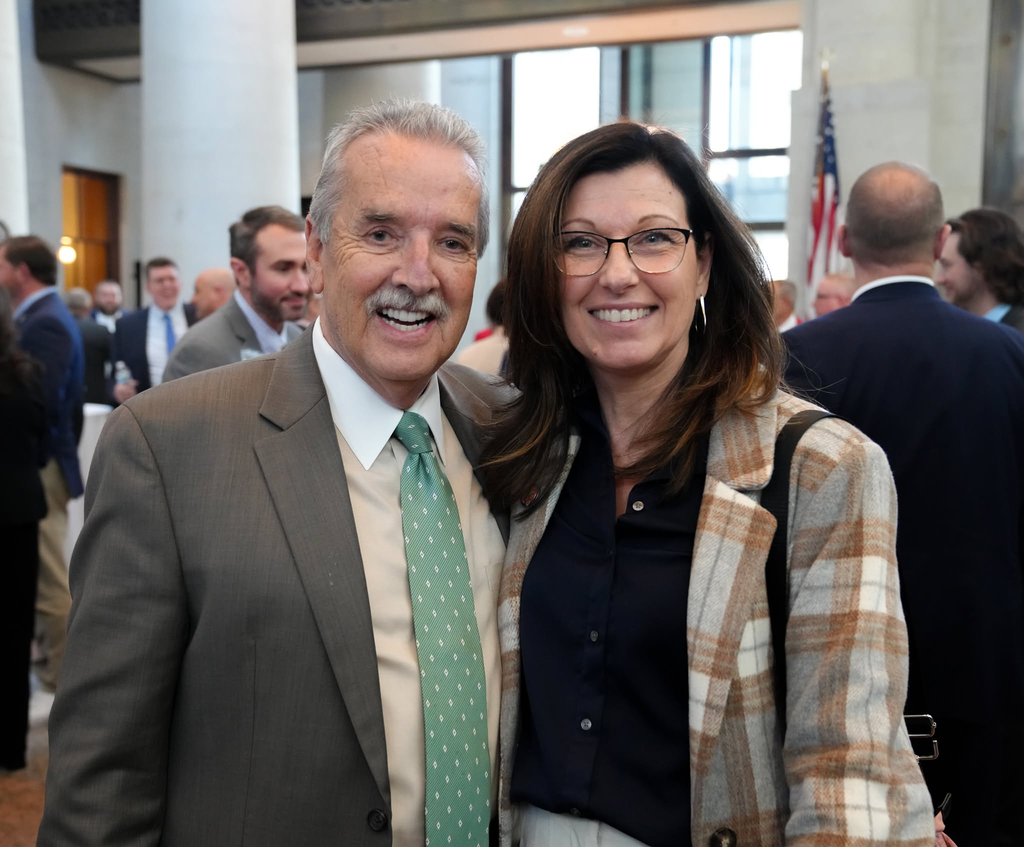
Columbiana County Commissioner Mike Halleck and House Majority Leader Marilyn John
|
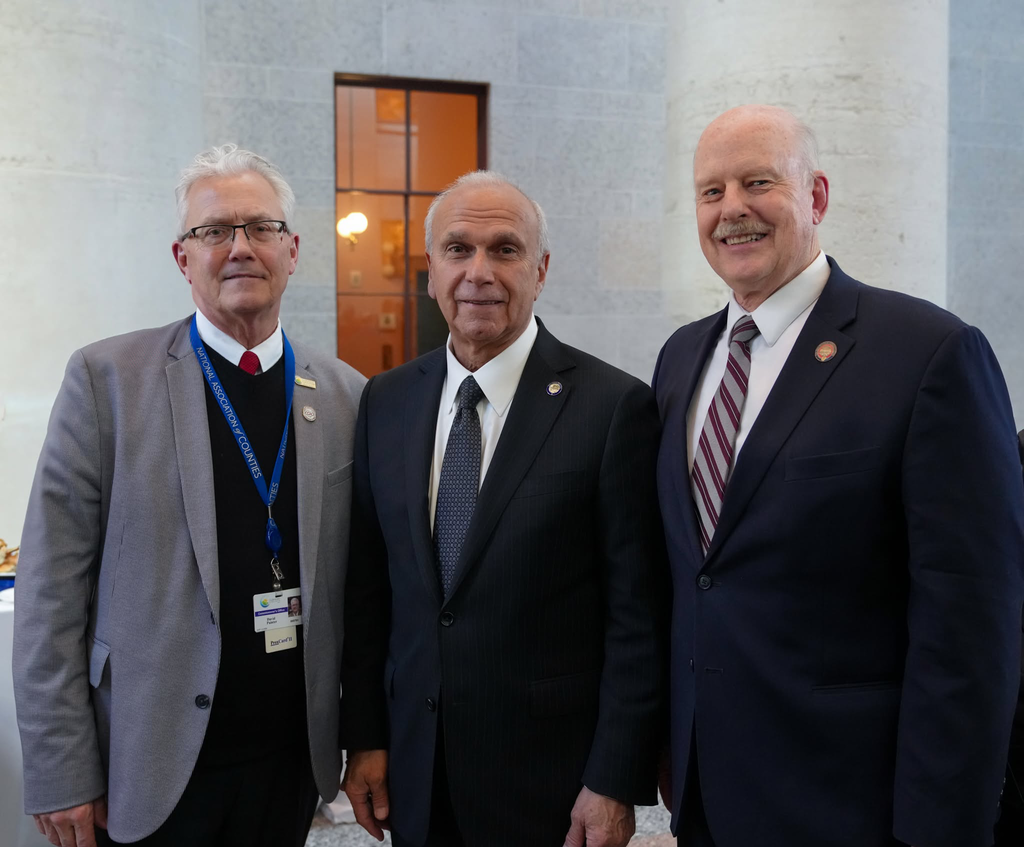
Clermont County Commissioner David Painter, Senate Finance Chair Jerry Cirino, and Representative Bill Roemer
|
Top Top Consolidation of Workforce Area 14 and Area 20 set in motion
The following is an excerpt from an October 9 press release from the Ohio Department of Job and Family Services. The full release is available here.
Ohio Department of Job and Family Services (ODJFS) Director Matt Damschroder announced today that two local workforce development areas in southeast Ohio are moving toward consolidation, a change designed to strengthen workforce services and better serve the region’s job seekers and employers.
Workforce Development Areas 14 and 20 – which collectively serve Athens, Fairfield, Hocking, Meigs, Perry, Pickaway, Ross, and Vinton counties – have proposed merging into a single local workforce development area. The consolidation reflects the strong economic development connections along State Routes 23 and 33. It is intended to build greater strategic alignment, strengthen service partnerships, and more effectively address rural and Appalachian workforce needs.
“Southeast Ohio’s workers and employers deserve a coordinated, regional response,” Director Damschroder said. “By bringing these two areas together, we can deliver stronger, more connected services to job seekers and employers across this essential part of our state.”
Ohio currently has 20 designated local workforce development areas, established under the federal Workforce Innovation and Opportunity Act, to provide employment and training services and administer workforce development programs through the state’s OhioMeansJobs Centers. Local workforce areas are designed to serve both job seekers and businesses and to anticipate and respond to the needs of regional economies.
“We have a high-performing workforce board, and this provides an opportunity to expand that reach while finding efficiencies to better serve employers and job seekers in these counties,” said Rick Szabrak, executive director of Workforce Development Area 20. “There’s great connectivity between these counties, especially as the Columbus region continues to grow.”
The consolidation began with the chief elected officials of Areas 14 and 20, comprised of commissioners from each county, submitting a formal re-designation application to ODJFS. The agency reviewed the application to ensure the combined area has consistent labor markets, common economic development connections, and the necessary resources to administer workforce development activities. Top Funding opportunities table changes
The Federal funding opportunities table below has been updated with 10 new grants. The grants are all justice-related and close in November (seven close on November 16).
Several of the grants focus on the juvenile justice system and on opioid-affected youth offenders.
Only two of the grants (both involving family treatment courts) require a local match,
State funding opportunities
The table below contains current state grant or loan programs. A more comprehensive list can be found on the Ohio Grants Partnership webpage.
Grant Program
|
Brief Summary
|
Eligibility Criteria
|
Amount Available
|
Application Due Date
|
| Building Demolition and Site Revitalization Grant Program |
To provide funding for the demolition of commercial and residential buildings and revitalization of surrounding properties on sites that are not brownfields. |
The designated lead agency in each county
(Listed in "Lead Agency List")
|
$21.5 million available
|
October 16. 2026 |
| MARCS Grant |
To assist volunteer fire departments and small fire departments in acquiring systems and equipment to integrate into the Multi-Agency Radio Communication System. |
Volunteer fire departments and fire departments serving areas with less than 25,000 residents
[non-county grant]
|
Maximum award: $50,000
|
October 24, 2026 |
| H2Ohio Conservation Ditch Grant Program |
To provide reimbursement for the construction of two-stage and self-forming conservation ditches. |
Soil and water conservation districts and county engineers |
Unspecified
Reimbursement model
|
June 1, 2027
(Rolling until) |
Federal funding opportunities
The table below contains a sampling of current federal grant or loan programs. A full list can be found on Grants.gov.
Grant Program
|
Brief Summary
|
Eligibility Criteria
|
Amount Available
|
Application Due Date
|
| Upholding the Rule of Law and Preventing Wrong Convictions Program |
To enhance wrongful conviction review entities and to prevent future wrongful convictions. |
General availability |
$5.4 million available
No match required
|
November 2, 2026 |
| DNA Capacity Enhancement for Backlog Reduction Program |
To increase capacity for existing crime labs to process DNA samples for entry into CODIS. |
General availability to entities with crime labs. |
$4.9 million available
No match required
|
November 3, 2026 |
| Family Treatment Court Program (New Courts) |
To support the implementation of family treatment courts. |
General availability to entities without a family treatment court. |
Maximum award: $850,000
Local match of at least 25%.
|
November 16, 2026 |
| Family Treatment Court Program (Existing Courts) |
To support the expansion of family treatment courts. |
General availability to entities with a preexisting family treatment court. |
Maximum award: $750,000
Local match of at least 25%.
|
November 16, 2026 |
| Opioid Affected Youth Initiative |
To reduce violent crime and overdose deaths through prevention, intervention, and treatment strategies. |
General availability |
$8.9 million available
No match required
|
November 16, 2026 |
| Expanding Youth Access to Community-Based Treatment |
To support the development and expansion of community-based treatment programs serving youth. |
General availability |
$4.0 million available
No match required
|
November 16, 2026 |
| Strategies to Support Children Exposed to Violence |
To improve communities' ability to help children exposed to violence in their homes, schools, and communities. |
General availability |
$7.3 million available
No match required
|
November 16, 2026 |
| Juvenile Justice System Enhancements |
To improve the cost-effectiveness of the juvenile justice system by implementing targeted solutions to high-cost crime drivers. |
General availability |
$4.0 million available
No match required
|
November 16, 2026 |
| Mentoring for Youth Impacted by Opioids and Substance Use |
To support high-quality mentoring services for youth currently using or dependent on substances, as well as youth with close family members using or dependent on substances. |
General availability |
$16.5 million available
No match required
|
November 16, 2026 |
| Strengthening Operations to Reduce Crime and Recidivism |
To support projects that address one or more urgent local justice system challenges. |
General availability |
$12.7 million available
No match required
|
November 20, 2026 |
| Title X Family Planning Services Grants |
To promote the general family planning programs and goals under Title X of the Public Health Service Act. |
General availability |
Maximum award: $22 million
Local match of between 1% and 10%
|
January 9, 2027 |
Top Each week Counties Current highlights the happenings in our counties in the words of their local media.
One story from each of the CCAO's five districts is highlighted, and on occasion other stories may be highlighted as well.
A paid subscription may be required to view the full article in some cases.
Northwest District
Fulton commissioners discuss future of EMS; seek to reallocate LGF money
Crescent-News, October 9, 2026
Fulton County commissioners discussed the future of EMS services during a recent meeting.
Commissioners met with representatives of the village governments of Wauseon and Swanton.
The two communities recently have teamed to take a look at the EMS situation, issuing a request for proposals (RFP) from consultants to study the matter.
According to commissioners’ meeting minutes, Wauseon City Law Director Tom McWatters noted that the RFP’s purpose is “for an independent consultant, entity, or person to come into the county and look under the hood, look at all the resources with operations and funding. ... I guess that the thought is that you know we have seven great fire departments that perform EMS and fire services with deep traditions and history of serving their constituents, and by human nature it is difficult to set aside biases and think outside the box. So, the idea is to bring in somebody without connections to the community and can speak without having to answer to those traditions and history.”
Fulton County Administrator Dennis Kennedy noted that commissioners will seek input from the county’s other departments, then revisit the matter in the future.
In another matter, commissioners approved a resolution concerning the county’s share of local government funds (LGF) provided by the state.
Specifically, commissioners have decided to reduce the county government’s allocation of these funds in 2027 from 48% to 9%, with the affected funds being distributed to the county’s townships and municipalities.
The resolution, which asks the county budget commission — the allocating authority — to make this change, notes that the county government “possesses sufficient financial resources” to allow the temporary reconfiguration.
Northeast District
Trumbull County considers cash back credit card for revenue source
WKBN, October 6, 2026
When you use a credit card, you can get cash back to spend on other purchases. There’s a version of that for Ohio’s counties.
Trumbull County commissioners listened to a presentation Tuesday from Huntington Bank to join the Ohio County Commercial Card Consortium. The county would receive a cash back rebate based on the consortium’s spending.
Trumbull County Commissioner Tony Bernard calls it a great way for the county to get more money back.
“I think it’s a great revenue source for us. By using the credit card, we receive cash back dollars every month, and at the end of the year, being that we belong to a consortium, that kicks us into another level, and we can receive additional money,” Bernard said.
Bernard says that Mahoning County currently uses this system and that the county makes back between $120,000 to $140,000 annually to their budget for revenue.
Trumbull County Treasurer Agostino Ragozzino calls it a win-win situation.
“The advantage for the county is that it’s a revenue source. It’s a very easy revenue source, so we’re going to be paying the bills. We’re going to be paying the bills by ECH, by check, or by credit card—assuming the credit card has no fee and the supplier that we are paying doesn’t charge us. It’s a win-win,” Ragozzino said.
Central District
Following severe weather, Champaign County reevaluates need for tornado sirens
Springfield News-Sun, October 6, 2026
Local officials are exploring whether tornado sirens could once again become part of Champaign County’s emergency notification system following recent severe weather and questions from residents about the lack of active sirens.
Representatives from the City of Urbana and the villages of St. Paris, Mechanicsburg and North Lewisburg recently met with the Champaign County Board of Commissioners and the Champaign County Emergency Management Agency (EMA) to discuss the possibility during a regularly scheduled commissioners meeting.
Spencer Mitchell, who serves as director of administration for the City of Urbana, said residents have raised questions about why the city and county alike no longer have active tornado sirens.
Those questions became more frequent following severe weather this August that caused damage to properties throughout the county, including trees falling on homes and vehicles, as well as power outages. An EF1 tornado with 110 mph winds tracked from near Mutual to Catawba in just four minutes, tearing off home roofs, destroying a barn, and downing trees along a 200-yard-wide path.
Additionally, the storm hit while the Champaign County Fair was underway, bringing unusually high crowds to the area.
“Numerous properties in Urbana were impacted as a result of this storm and questions surrounding the topic were shared with us,” Mitchell said. He continued, saying that the county’s previous sirens were decommissioned around 2012, in part because of increasing maintenance and repair costs, coupled with the fact that they were at the end of their useful life.
City or county officials typically activate outdoor sirens to warn residents of severe weather, including tornado warnings.
If a new system is pursued, Mitchell said officials would be looking at purchasing new sirens rather than reactivating existing equipment.
Southwest District
Highland County commissioners host discussion on roadway safety with Amish buggies
Highland County Press, October 10, 2026
Highland County commissioners Terry Britton, David Daniels and Brad Roades, along with first responders and area residents, engaged in a 45-minute discussion of road safety concerning Amish buggies during commissioners’ Wednesday, Oct. 7 meeting.
The meeting was held after the Ohio State Highway Patrol’s Wilmington Post reported four accidents involving buggies in a one-month span, including a fatal crash Sept. 3 at U.S. 50 and state Route 753, a fatal crash Sept. 28 on state Route 138 and an accident Sept. 29 on state Route 124.
The uptick in crashes prompted the Highland County Sheriff’s Office to post “safety tips for sharing the roadway with horse-drawn vehicles” on their website and social media Sept. 30.
“Last year, January 1 to December 31, we had four related crashes with buggies — four total, the whole year,” Ohio State Highway Patrol Trooper Todd Stevens said. “This year, we have four total. They've all just happened within the last month.”
Britton said commissioners also wanted to “have an open discussion” for first responders and members of the community to share their feedback.
Among the topics discussed was the cause of accidents and whether anything could be done to help prevent further wrecks. Also discussed were speed and whether buggies are equipped with proper lights and signage.
Highland County Sheriff Randy Sanders said that one of the biggest causes is “probably distracted driving.” As an example, Stevens said that he knew at least one of the recent accidents occurred “on a straight stretch,” not in an area with “curvy roads and hilly roads.” Highland County Engineer Chris Fauber added that “at this time of year,” drivers have “the sun in their eyes” in the morning and evening, which can also be “a factor.”
“I see distracted drivers driving down the road every day, not paying attention to what they're doing,” Daniels said. “We’ve all got to take a little bit a part of this and slow down a little bit, pay attention, know that there are Amish on the road, but I would hope that they would respond in kind and know that there's a few things they can do as well to keep from having some of these problems occur.”
Highland County Prosecutor Anneka Collins and one of the residents agreed that they have seen issues that were caused by Amish buggy drivers as well, including kids racing and/or causing damage to their own buggies. However, Collins pointed out that it’s the same concept as any other teen driver who thinks “they’re invincible."
Southeast District
Gallia County Commission announces grant award for airport's weather observation system
WV News October 4, 2026
The Gallia County Commission approved a $125,000 grant agreement Thursday from the Appalachian Regional Commission to fund a vital weather system upgrade at the Gallia-Meigs Regional Airport. The federal funding will be used to replace the airport’s non-functional Automated Weather Observing System.
The installation of new, FAA-certified equipment will restore the airport to full-service capability, supporting both local business and emergency aviation services across Gallia and Meigs counties.
The project total stands at $156,455, with ARC providing 79.9% of the funding. Gallia County will provide the remaining 20.1% local match of $31,455, funded through either the County General Fund or the Airport Fund.
Officials noted the upgrade is especially critical following the closure of the neighboring Mason County Airport in West Virginia.
As major economic development projects increase across adjacent Mason County and the surrounding region, general aviation demand at the Gallia-Meigs facility is expected to grow.
ARC estimates the investment will help retain 11 jobs across three airport-based businesses in Gallipolis.
During Thursday’s meeting, Grants Administrator Karen Sprague presented the ARC award letter for grant agreement OH-23222 to the commissioners.
Commission President Jeremy Kroll called for motions to authorize electronic signature of the agreement and to direct the County Budget Commission to establish a dedicated fund, titled “2026 GOA ARC OH-23222 Airport Grant”.
The commission unanimously passed resolutions to approve the agreement and appropriate the $125,000 grant funds into the newly created account. Vice-President Tony Hughes moved both measures, seconded by Commissioner Jay Stapleton, with Kroll, Hughes and Stapleton all voting in favor.
Top OCTOBER 16
CCAO Board of Directors Meeting (Virtual)
OCTOBER 30
CEBCO Board of Directors Meeting
NOVEMBER 3
General Election
NOVEMBER 6
CORSA Board of Directors Meeting
NOVEMBER 6
OCCO Legislative Reception Top
|