2026 Ohio Counties Scholarships awarded
Congratulations to the recipients of the 2026 Ohio Counties Scholarship! Five students, one from each of CCAO's districts, received a $2,000 scholarship to aid in their collegiate education focusing on a career in public service.
This includes, but is not limited to: elected official, public administrators, civil servants/government employee, social workers, military, education, healthcare, law enforcement and justice, emergency services, non-profit and community service, conservation/wildlife, city/state planners, public works employees, and workforce development.
This year's recipients intend to pursue careers in public works, civil engineering, the legal field and the medical field.
Northwest
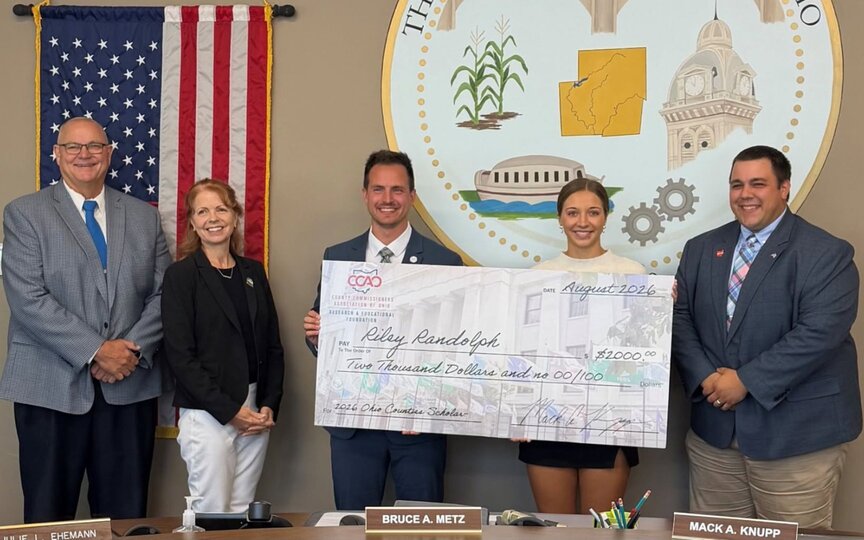
Riley Randolph, Shelby County
|
Northeast
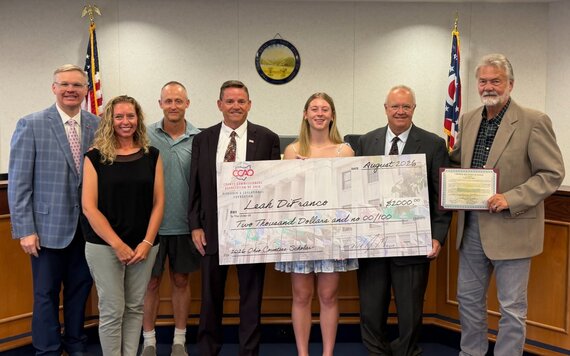
Leah DiFranco, Lorian County
|
Central
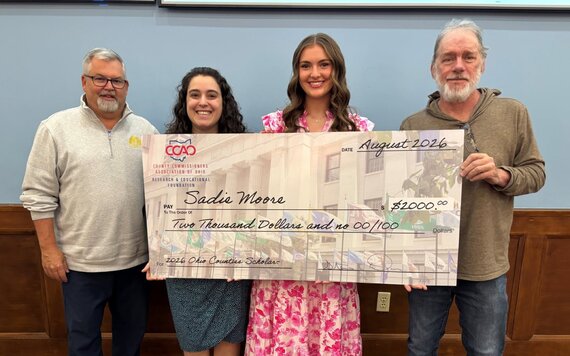
Sadie Moore, Fairfield County
|
Southwest
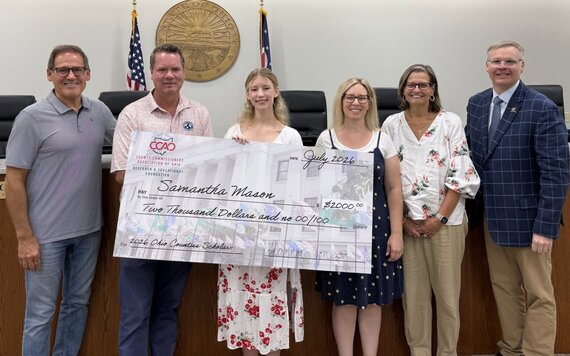
Samantha Mason, Warren County
|
Southeast
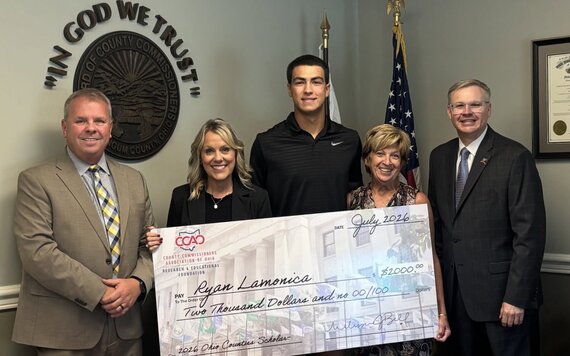
Ryan Lamonica, Muskingum County
|
The scholarships are provided through the CCAO Research and Education Foundation, a 501(c)(3) organization that obtains grants and donations to provide the high-quality information, tools, and training for our members and the people of Ohio.
You can donate to the Research and Education Foundation through the link below.
Donate!
Recording, slides available from CCAO's webinar on the children services system; overview of placement costs cap bill
Last week, CCAO held a webinar with PCSAO to provide commissioners with an overview of the children services system and a deeper examination of the stressors and cost drivers that are fueling the children services placement crisis felt by counties across the state.
The webinar was the first in a series focusing on human service functions that Ohio counties operate. The next webinars are on job and family services agencies (September 14) and child support enforcement agencies (September 28).
The webinar was timely, as the day before Representatives Justin Pizzulli and Darnell Brewer hosted a press conference introducing House Bill 984, which would set rate caps for child welfare placement costs.
House Bill 984 Press Conference
Scioto County Commissioner Scottie Powell and Scioto County JFS Director Tammy Moore Morton joined the representatives to provide insight into Scioto County’s child welfare challenges.
HB 984 requires the Department of Children and Youth (DCY) to develop and administer a system to establish payment rates for the placement and care of children in DCY licensed settings, including foster homes, residential facilities, and group homes. It includes an emergency clause, which would make the bill effective immediately upon the governor’s signature. These bills require a 2/3 affirmative vote to pass, rather than a simple majority.
The bill also requires DCY to consult with county public children services agencies (PCSAs), boards of county commissioners, and licensed providers when developing the rates. The rates that are set through the process would be the maximum allowable payment rate that a county could pay for the placement of the child. The legislation allows rates to be adjusted every two years.
HB 984 allows DCY to establish, through rule, exceptions to the traditional rates “for extraordinary or specialized placements and care.” The Department is required to establish maximum rates for these types of care as well.
During the press conference, Reps. Pizzulli and Brewer highlighted the need to calm child placement costs that have soared in recent years, and the need for consistency and transparency in what counties are expected to pay. Rep. Pizzulli described the statewide situation in which the number of children in care has decreased while the costs have increased dramatically.
Commissioner Powell described Scioto County’s fiscal position due to child welfare costs. In the last four years, the number of children in Scioto County custody has decreased by over 50%. Despite the significant reduction in children in care, the agency’s placement costs are higher today than they were four years ago. Director Moore Morton shared that one child in Scioto County was on track to cost $1 million in a single year.
Even though Scioto County voters approved a levy that tripled the revenue available for children services, the revenue is not covering the costs. Without change, the commissioners may be forced to cut other county services, including law enforcement and court services, to cover the difference.
“The most troubling part of this equation is even if we manage to cut $4 million of expense of our $24 million general fund, the problem is still not fixed. Rates can and will go up because there are no guardrails to prevent it,” Commissioner Powell said.
Funding for child placement costs has been a CCAO priority. Counties across the state are seeing unsustainable rises in these costs. When a child enters custody, it is often hard to predict how much the county will be required to pay for placement.
In House Bill 96, the current state operating budget, the legislature passed language requiring DCY to establish rate cards using provider reported costs in response to an advocacy request from CCAO and the Public Children Services Association of Ohio (PCSAO). Congregate care providers (residential facilities and group homes) are required to participate, while foster homes may opt to participate. PCSAs will be able to collect federal Title IV-E reimbursement on all rates established through the rate card process.
DCY anticipates the rate cards will be effective January 1, 2027. If HB 984 passes in its current form, the rate card language in statute would be repealed and replaced with this new rate establishment process.
CCAO is reviewing HB 984 and will continue to keep members updated. Members with questions should contact Rachel Reedy at rreedy@ccao.org.
CCAO partnering with ODA to promote Ohio agricultural production
CCAO is partnering with the Ohio Department of Agriculture's "Ohio Proud" marketing program to highlight food and agriculture products made in Ohio.
ODA invites you to join in the August celebration of Ohio Proud Month by recognizing the outstanding food and agriculture businesses in your county that proudly produce, process, and grow Ohio products. Ohio Proud Month is an opportunity to highlight the hardworking farmers, food manufacturers, and small agriculture businesses that contribute to our state's rich agricultural heritage while strengthening local economies and creating jobs.
We encourage your participation by:
- Issuing a proclamation recognizing Ohio Proud Month in your county.
- Highlighting local Ohio Proud member businesses through your website and social media channels.
- Sharing the importance of supporting local agriculture and food businesses with your community.
Your participation sends a message of appreciation to the businesses and individuals who work every day to provide high-quality Ohio products while investing in our local communities. We would be honored to have your county join us in this statewide celebration.
Ohio Proud has provided a listing of its 360 member companies and a proclamation template for your use. If you don’t see your county listed as having an Ohio Proud member business, we encourage you to share the Ohio Proud message and let your local businesses know that ODA offers programs to amplify the importance of buying local and supporting Ohio food businesses.
Please send any photos of your board passing the resolutions or honoring a business, or any questions you may have, to Kenton Dresbach at (740) 601-8334 or kdresbach@ccao.org.
If you would like more information about Ohio Proud, or if you have local businesses interested in learning more about the program, please send them to Ohio Proud’s Marketing Specialist, Ashley McDonald, at 614-728-6206 or OhioProud@agri.ohio.gov. Top Top ADVOCACY NEEDED: Federal transportation funding cliff at September's end
NACo and CCAO are encouraging counties to reach out to your federal delegation and advocate for vital transportation funding.
The country is approaching a federal transportation funding cliff at the end of September. Existing federal funding for transportation was funded through the Infrastructure Investments and Jobs Act (IIJA), which expires at the end of September (the end of the federal fiscal year).
The IIJA funded transportation projects through two mechanisms:
- Highway Trust Fund - $383 billion
- Guaranteed Set-Asides - $155 billion
Of particular note to counties is a portion of the set-asides. The Bridge Formula Program, which will disappear entirely on October 1, provided $5.5 billion to assist local governments build and maintain bridges.
The Continuing Resolution that the Senate recently passed (including, among other things, the delay in the OMB rule change) extended portions of the IIJA, but not the guaranteed set-asides.
NACo has prepared template letters for House of Representatives members and Senate members, as well as talking points to use with your delegation or their staff. These documents are available for download below.
If you have any questions, please contact Ben Gilsdorf, NACo's Legislative Director for Transportation.
Public safety in state parks recommendation report issued
On Friday, Governor DeWine announced the recommendations from the Public Safety in Ohio State Parks Working Group. The Working Group was convened after the governor vetoed a provision from the state operating budget that would have required the Department of Natural Resources to reimbursement local governments for emergency response services provided at South Bass island State Park.
The governor was concerned that the requirement, which did not include an appropriation, would require cutbacks in similar services at other state parks. The Working Group was created to provide recommendations on statewide improvements to how the state supports local law enforcement activities in state parks.
CCAO was represented on the Working Group by Hocking County Commissioner Jason D'Onofrio.
The Working Group issued seven recommendations, which are discussed in more detail in the report itself. The recommendations are:
- Create a Department of Public Safety grant program to aid local agencies that assist in responding to emergencies at state parks.
- Require the Ohio Emergency Management Agency (EMA) to include information on its site regarding how to request mutual aid through the state's Emergency Response System.
- Explore the potential of a standardized public safety fee for large, third-party events held at state parks.
- Establish a Drones as First Responders pilot program tailored specifically to local agencies that provide support to state parks.
- Incorporate exercises and drills focused on responding to calls in state parks into joint training exercises between local law enforcement and Ohio EMA and county EMAs.
- Create a toolkit between the Ohio Travel Association and county convention and visitors bureaus aimed at supporting local law enforcement.
- Encourage the General Assembly to pass legislation that requires counties to publish an annual report regarding compliance with lodging tax payments.
This final recommendation arises out of the lack of uniformity in county lodging tax collection procedures and schedules. The annual report would, in theory, help identify those entities that are not properly collecting and remitting the tax.
CCAO has an existing platform position recommending that the penalties for failing to collect and remit the tax be aligned with the penalties for failing to collect and remit sales tax properly. The concept of an annual report could be a step towards creating stiffer penalties.
AG Opinions on prosecutor per-diems, probate court location released
Last week, Attorney General Andy Wilson issued two Attorney General Opinions of note to counties.
The first, OAG 2026-009, arose out of a question from the Franklin County Prosecutor regarding the usability of furtherance of justice funds, the law enforcement trust fund, and/or mandatory drug fine money for certain travel-related per diems.
The Attorney General found that these funds may be usable for travel-related per diems, but it will ultimately depend on the purpose of the travel and any internal polices.
For example, mandatory drug-find money can be used for "law enforcement efforts that pertain to drug offenses." If the travel in question is for training that pertains to drug offenses, this fund could be used for per diems, but if the travel is for non-drug offense related training, it would be impermissible.
Additionally, the Auditor of State requires the prosecutor to maintain receipt documentation of reimbursements from the three funds in question. Any per diem use of the funds must comply with the receipt policy.
The second opinion, OAG 2026-010, pertains to if a probate court can hold court outside of the county seat, provide that an office is still retained in the county seat for the purpose of depositing books, records, and papers.
The question arose out of Ashtabula County's ongoing efforts to consolidate court space.
Since R.C. 2101.01 specifies that a probate division "shall be held at the county seat," joined with the specific statutory allowance for other counties to be based outside of the county seat, the Attorney General found that probate courts must be held in the county seat.
CCAO encourages members review the opinions.
Farm Science Review Grand Opening registration open through August 31
Registration for the 2026 Farm Science Review's Grand Opening is open! The grand opening will take place on September 22, and the full annual event will be held from September 22-24 in London at the Molly Caren Agricultural Center.
The Grand Opening will include a breakfast, opening remarks from Vice President and CFAES Dean Cathann Kress and other special guests, followed by a self-guided tour of the event.
Registration for the Grand Opening can be completed here. The deadline is August 31 to ensure that registrants will receive their ticket and parking pass in a timely manner.
The Farm Science Review is one of the nation's leading events focused on agricultural education, demonstrations, and innovation. Advance tickets are available for $10 through county OSU Extension offices and will be available for $15 at the gate. Top Application window for SFY 2027 Brownfield Remediation Grants run throughs September 11
The Department of Development recently released the updated Fiscal Year 2027 guidelines and application information for the Brownfield Remediation Program. Applications will open tomorrow, August 11, and will close on September 11.
The Brownfield Remediation Program provides grants for the cleanup of brownfield sites and assists with the remediation of hazardous substances or petroleum at industrial, commercial, or institutional properties.
Remediation may include the acquisition of a brownfield, demolition performed at a brownfield, and the installation or upgrade of the minimum amount of infrastructure necessary to make a brownfield site operational for economic development activity.
The SFY 2027 program year will provide roughly $120 million in grants, with funds being awarded on a merit-based evaluation process that takes the following criteria into consideration:
- Economic merit of the project to the county, surrounding counties, and state;
- Ensuring that projects are awarded in different regions of the state;
- Readiness of the project to begin upon notification of award; and,
- Local support of the proposed project.
OSU Extension hosting grant workshop in Belmont County on October 2
The Noble County and Belmont County OSU Extension offices, in partnership with the Ohio Mid-Eastern Governments Association, are hosting a grant writing workshop in St. Clairsville on October 2.
The workshop, running from 9:00 a.m. to 4:00 p.m., will cover what to do before you write a grant; organizational mission and structure; components of a grant proposal; finding and connecting with funders; and a provide complimentary proposal review.
The fee for the course is $125, but communities and organizations located in an Appalachian county will receive a discounted rate.
The workshop is space limited and registration closes on September 15 (unless it fills earlier).
Registration can be completed by emailing Cathryn Stanley, Program Coordinator for the Noble County Ohio State University Extension Office.
Rolling applications open for Conservation Ditch Grant Program
The Ohio Department of Agriculture is accepting applications for the 2026 H2Ohio Conservation Ditch Grant Program.
The program is a reimbursement model, providing up to 100% reimbursement for conservation ditch construction. Only two-stage ditches and self-forming ditches are eligible for consideration. Additionally, the watershed where the ditch is located must predominantly encompass cropland.
Only soil and water conservation districts and county engineers are eligible applicants.
Ditches reimbursed through the program do not need to be added to the county ditch maintenance program, but those that will be will receive prioritization.
The deadline for applications is June 1, 2027. However, grants will be approved on a rolling basis, so interested applicants are advised to submit applications at any time before the deadline.
The program's webpage has more information, including a recording of a webinar discussing program details.
State funding opportunities
The table below contains current state grant or loan programs. A more comprehensive list can be found on the Ohio Grants Partnership webpage.
Grant Program
|
Brief Summary
|
Eligibility Criteria
|
Amount Available
|
Application Due Date
|
| Rural Health Transformation Program |
To improve health behaviors associated with cardiovascular diseases, type 2 diabetes, and obesity in rural areas, and to strengthen rural communities by improving healthcare access, quality and outcomes by transforming the current system. |
Public health departments serving a non-urban county
(Map available on page 18 of the linked PDF)
|
$7 million available
No match required
|
September 8, 2026 |
| Brownfield Remediation Program |
To assist in the remediation of hazardous substances or petroleum at industrial, commercial, or institutional properties. |
General availability |
$120 million available
No match required
|
September 11, 2026 |
| Precinct Election Official Recruitment and Training Grant |
To provide assistance in the recruitment and training of precinct election officials for the 2026 November general election. |
County boards of elections |
Set allocation per county, contact the Secretary of State for further information
|
Unspecified, but terms must be completed by November 2, 2026 |
| H2Ohio Conservation Ditch Grant Program |
To provide reimbursement for the construction of two-stage and self-forming conservation ditches. |
Soil and water conservation districts and county engineers |
Unspecified
Reimbursement model
|
June 1, 2027
(Rolling until) |
Federal funding opportunities
The table below contains a sampling of current federal grant or loan programs. A full list can be found on Grants.gov.
Grant Program
|
Brief Summary
|
Eligibility Criteria
|
Amount Available
|
Application Due Date
|
| Healthy Homes Production Grant Program |
To address multiple childhood diseases and injuries in the home by focusing on housing-related hazards in a coordinated fashion, rather than addressing a single hazard at a time. |
General availability
|
$97.85 million available
Local "leverage" required (see full description for explanation)
|
August 31, 2026 |
| Local Law Enforcement Grants for Enforcement of Cybercrimes Program |
To support the prevention, enforcement, and prosecution of cybercrimes against individuals (defined as criminal offenses that involve the use of a computer to harass, threaten, stalk, extort, coerce, cause fear to, or intimidate an individual, or without consent distribute intimate images of an adult). |
General availability |
$6.75 million available
No local match required
|
September 1, 2026 |
| Wetland Mitigation Banking Program |
To support the development and establishment of mitigation banks and banking opportunities solely for agricultural producers with wetlands subject to the wetland conservation compliance provisions of the Food Security Act of 1985 (as amended). |
General availability |
$3 million available
Local match of 20% of project cost
|
September 8, 2026 |
| Consolidated Youth Grant Program |
To support community-based efforts to develop or expand prevention, intervention, treatment, and response strategies addressing the needs of children and youth (ages 0-24) affected by domestic/dating violence, sexual assault, stalking, and sex trafficking. It also supports work with men and youth to prevent those crimes. |
General availability |
$14 million available
No local match required
|
September 8, 2026 |
| Training and Services to End Abuse in Later Life Program |
To support a comprehensive approach to addressing abuse in later life, including domestic/dating violence, sexual assault, stalking, neglect, abandonment, economic abuse, or willful harm committed against victims who are 50 years of age or older. |
General availability |
$8 million available
No local match required
|
September 14, 2026 |
| Low or No Emission Bus Grant Program |
To support the purchase or lease of low-emission and zero-emission transit buses, including acquisition, construction, and leasing of required supporting facilities. |
Local governments that operate fixed-route bus service. |
$589 million available
Local match of 20% required (some exceptions apply)
|
September 21, 2026 |
| Buses and Bus Facilities Program |
To support the purchase, rehabilitate, or lease of buses and related equipment, and to support the construction, purchase, rehabilitation, or lease of bus-related facilities. |
Local governments that operate fixed-route bus service. |
$21 million available
Local match of 20% required (some exceptions apply)
|
September 21, 2026 |
| North American Wetlands Conservation Act Standard |
To support projects that involve long-term protection, restoration, and/or enhancement of wetlands and associated uplands habitats for the benefit of all wetlands-associated migratory birds. |
General availability |
$46 million available
1-to-1 local match required
|
September 25, 2026 |
| Title X Family Planning Services Grants |
To promote the general family planning programs and goals under Title X of the Public Health Service Act. |
General availability |
Maximum award: $22 million
Local match of between 1% and 10%
|
January 9, 2027 |
Top Each week Counties Current highlights the happenings in our counties in the words of their local media.
One story from each of the CCAO's five districts is highlighted, and on occasion other stories may be highlighted as well.
A paid subscription may be required to view the full article in some cases.
Northwest District
Paulding commissioners discuss energy project, economic matters
Crescent News, August 17, 2026
A trio of alternative energy projects and land bank projects were highlighted during recent Paulding County commissioner meetings.
Ali Stano and other representatives from EDP Renewables met with commissions to discuss three projects currently in development. The projects involve battery and solar energy.
The officials from EDP Renewables stated there have been ongoing supply issues for parts to service turbines. The company is looking for a new supplier currently.
Stano acknowledged that there have been complaints about mowing and weed control for the solar project in Harrison Township. The company is working to resolve this issue.
The Paulding County Planning Commission also discussed matters dealing with the battery and solar energy projects.
Chad Benschneider of Harrison Township presented zoning amendments to commissioners stating that one amendment deals with the solar energy and battery storage systems. The other amendment provides updates to zoning regulations that “reflect recent state legislative changes and adjustments to zoning fees.”
The county prosecutor reviewed the proposal and notified township trustees that they needed to meet with the planning commission to inform them of the changes. Engineer Scott Strahley stated he would draft a letter supporting the amendments. The planning commission then adjourned.
Paulding County Economic Development Director Tim Copsey also discussed matters with commissioners.
He stated that the Ohio Department of Development has approved a list of 19 projects for grant funding for the county’s land bank. Copsey stated that the projects are distributed across the county.
There are many other grant funds that are assisting with other projects throughout the county, including improvements for Payne sidewalks and parks, Riverside Park, the county fairgrounds and Monroe Street.
The Western Buckeye Educational Service Center has secured a $100,000 workforce development grant. The funding will be used for a career navigator position that will be shared between two counties.
In addition, Copsey stated that the Village of Antwerp has been approved for funding for a new water treatment facility. The village of Paulding, meanwhile, is preparing for a Williams Street (U.S. 127) project.
Northeast District
Medina County Board of Developmental Disabilities hosts first responders event
Medina Gazette, August 12, 2026
Medina County residents with disabilities and their families met with local first responders and became familiar with emergency equipment during the Medina County Board of Developmental Disabilities’ first Community Safety Day.
The free event, held at the Medina County Achievement Center on Tuesday, brought together children, adults, families and emergency personnel for a morning of hands-on activities and community resources.
Attendees could explore police cars, fire trucks and other emergency personnel in a relaxed, non-emergency setting.
The idea came from meetings with the board’s self-advocates, who expressed interest in meeting first responders in a non-emergency setting, community relations manager Patti Hetkey said.
“We have had this whole initiative over the last year and a half on how to connect safety forces with the people we serve,” Hetkey said.
The event was designed to allow people with disabilities and first responders to become familiar with one another before interacting during an emergency.
Hetkey said that unfamiliar environments and sensory issues can cause sensory overload for some individuals.
“If you know you can trust this person in an emergency, that helps somebody get the help they need quicker,” she said.
The event included opportunities for attendees to interact with first responders and learn more about their equipment, with additional community resources available, including the health department.
Families also benefited from the ability to meet and become familiar with first responders, director of community support Ed Dryer said.
Central District
Perry County Officials Share Flood Plain Information
WHIZ, August 18, 2026
Perry County Officials are sharing information for home and property owners who may be in flood plains.
Perry County Commissioner, Ben Carpenter, has spent most of his career in Perry County, 30 years of which he served as the Administrator of the Soil and Water Office and 25 as the County’s Flood Plain Manager.
He says thought it would be a good time to share some information on what a flood plain is and how the levee we reported on last week is still doing its job 66 years later.
“Land that’s in a flood plain, floods. It’s going to rain and flood waters rise.” Carpenter said. “In 1950, there were some major storms, flooded Roseville, and wiped out Roseville. As a result of that, that levee that you see and reported on along Roseville was built in 1960 by the Army Corps of Engineers and it protected the Village of Roseville. This was the first event that really challenged that levee but it did its job, it held, and it protected them.”
Carpenter says without the levee, some parts of the county could’ve faced up to 5 feet of water instead of 2.
He says the common misconception with flood plains is people think they’re created due to global warming and climate changes but that’s not the case.
“This glass is going to be our flood plain, not the river or the creek, but the flood plain. So let’s say this flood event is up to this black line and the trouble or problem with flood plains is every year, these marbles are going to represent buildings and encroachment and development in the flood plain. So as buildings get built, in the flood plain, year after year, more and more houses get built, barns get built, soil gets added, more roads are built or developed, and what happens is that the capacity of the flood plain is diminished. So the event that we had recently brought that flood level up to that black line and it could build for another 10 to 20 years, you can see the same amount of water, now we have a flood event elevation that’s increased.”
Southwest District
Scioto County commissioners approve Hughes Center lease
Portsmouth Daily Times, August 14, 2026
The Scioto County commissioners approved a new three-year lease for the Hughes Center in Franklin Furnace, tabled a proposed resolution regulating engine-brake noise and discussed the county’s ongoing financial challenges during Thursday’s meeting.
Commissioners Scottie Powell, Merit Smith and Steven Mault also approved additional funding for a youth employment program, recognized August as Ohio Proud Month, supported a Portsmouth riverfront grant application and discussed the future of the county’s rail-trail project.
Commissioners unanimously approved a new three-year lease agreement with the Counseling Center for the Hughes Center in Franklin Furnace.
Commissioner Merit Smith said the Counseling Center had historically leased the county-owned property for $1 per year because of the community’s need for opioid treatment services. However, Smith said Green Township’s fire and emergency medical services personnel had raised concerns about the number of calls they make to the facility and the costs associated with those responses.
Under the new agreement, the Counseling Center will pay $5,000 per month to lease the property. The money will not go to the county. Instead, the entire $5,000 monthly payment will be paid to Green Township, with $3,000 going toward rescue and EMS services and $2,000 going toward the fire department.
Smith said the agreement took months to finalize as attorneys for the county and Counseling Center negotiated the terms. The lease includes a 90-day notice provision for either party to terminate the agreement.
Commissioners unanimously approved the lease.
Commissioners also discussed a proposed resolution regulating the use of engine brakes that cause exhaust systems to emit excessive noise, commonly known as “jake braking.” The issue was brought forward because of concerns about increased tractor-trailer traffic associated with the Google data center construction project in Franklin Furnace.
Southeast District
Community voices are key to guiding Coshocton County growth
Coshocton Tribune, August 16, 2026
Residents' input will play a key role in the development of Coshocton County.
Officials are asking for feedback to create a new land use plan that will focus on guiding economic growth, development and land use decisions through the coming decades.
Announced in March, the project will update the 2006 plan to help guide economic growth in the county, which is seen as crucial as new business developments like the Aligned Data Center under construction at the Conesville Industrial Park.
A land use plan manages and optimizes how land is developed and used while balancing social, economic and environmental needs. It can also direct growth through zoning, infrastructure planning and environmental protection. The main elements of the plan is geographic information system (GIS) mapping and input from local stakeholders.
Commissioner Bob Bigrigg said the county has changed dramatically since the creation of the 2006 plan, which supposedly had a 50-year outlook. He expects more changes over the next two decades and wants residents involved in shaping the county's future.
"There are many different dynamics and many different expansions of industry in our community. Potentially, this gives the public a way to provide input back into the situation," he said. "It needs to be as open and transparent as possible. People are allowed to participate. If they have something to add, they are welcome to come (to the meetings)."
Bigrigg would like to see the new plan feature input from the banking and finance sector and address zoning.
Currently, only Coshocton, West Lafayette and Warsaw have zoning regulations governing what types of commercial businesses or residential structures can be built. Bigrigg noted local officials had little oversight in the Aligned Data Center project because zoning regulations weren't in place. Top AUGUST 30 - SEPTEMBER 1
CCAO Summer Symposium
SEPTEMBER 1
CCAO Board of Directors Meeting (at Summer Symposium)
SEPTEMBER 7
Labor Day - Holiday
SEPTEMBER 18
CORSA Annual Membership Meeting
OCTOBER 2
CCAO/CEAO Southeast District Meeting (RSVP by September 15) Top
|