Greg Kaffenbarger named acting Clark County Commissioner
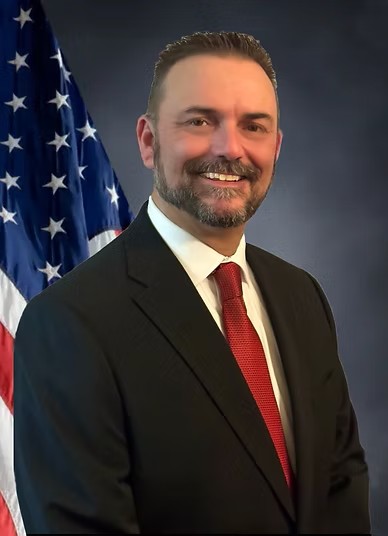 |
Last week, Greg Kaffenbarger was appointed as an acting Clark County Commissioner.
Commissioner Kaffenbarger will serve until a full replacement is elected to serve the remainder of the unexpired term originally held by Melanie Flax Wilt, who resigned at the end of 2025. Former Commissioner Rick Lohnes served as acting commissioner earlier in the year.
The term expires at the end of 2028.
Commissioner Kaffenbarger won the Republican Party primary last month to serve the full unexpired term. He does not have an opponent in the November election, although independent candidates may still file.
Commissioner Kaffenbarger has previously served as a Pike Township Trustee for 17 years and is a self-employed farmer. He also previously served as a page for State Senator Dave Hobson during Senator Hobson's time as Senate President.
Welcome to CCAO, Commissioner Kaffenbarger!
|
CEBCO announces Williams as Managing Director
CEBCO, a member-owned, self-insured risk sharing pool offering a vast array of wellness and health management services to Ohio counties, is pleased to announce Kevin Williams as its new Managing Director, Health and Wellness, effective June 1, 2026.
“Kevin Williams joins CEBCO at an important time for county employee health benefits and wellness initiatives,” said County Commissioners Association of Ohio Executive Director Cheryl Subler. “His leadership, expertise, and passion for service position him well to guide CEBCO into its next chapter. Kevin brings a unique perspective to this role, having served on both the advisory committee that helped set up the program more than 20 years ago and on the CEBCO Board of Directors.”
Prior to joining CEBCO, Williams spent 19 years as a human resources executive with Columbus Public Health and 16 years with the Delaware County Board of Commissioners in various human resources roles. Williams is a graduate of Bowling Green State University with a Bachelor of Science in Business Administration.
“Kevin combines strong leadership experience with a collaborative approach and a deep commitment to serving counties and their employees,” Subler added. “Quality, cost-effective health care and employee benefits are essential tools for counties in attracting and retaining a strong workforce, and Kevin understands the importance of that mission.”
CEBCO provides health benefits to 48 counties and over 16,000 county employees.
|
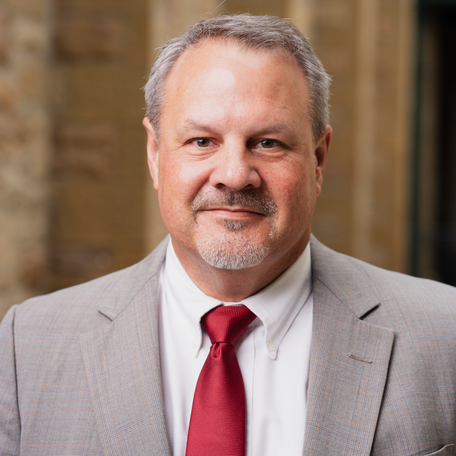
CEBCO Managing Director of Health and Wellness Kevin Williams
|
CCAO, County Auditors Association conducting CY 2025 budget survey
As we begin preparing for the upcoming state budget cycle, the County Commissioners Association and the County Auditors Association are working to accurately identify each county's general fund carryover, revenues, expenditures and reserve balance accounts.
Below is a link to a brief survey regarding your 2025 county general fund data.
Take the Survey Here
Please respond to the survey with fiscal data from CY 2025. The questions only request the topline figures.
If you would like to provide additional details, you can download an Excel template here and submit it through the file upload option presented at the end of the survey (to submit it, it must be saved as a PDF). You can also submit other supporting information as well.
We encourage boards of commissioners staff work with the county auditor's office to ensure that information provided is as accurate as possible. This survey data will be critical in communicating county fiscal conditions to lawmakers and advancing county priorities.
Please provide a response to the survey by June 23. It is imperative that CCAO and CAAO receive information from as many counties as possible.
If you are unsure if your county has provided a response to the survey, please refer to this tracker. The tracker will be updated daily at 5pm.
If you have questions about the survey, please contact Research Analyst Nick Ciolli.
Deadline approaching for TY 2026 authorization of piggyback property relief measures
The deadline for counties to authorize the permissive local ("piggyback") homestead exemption and/or owner occupancy credit is approaching in five weeks. For the relief measure to be effective for the current tax year (taxes payable in 2027), boards of county commissioners must adopt a resolution by June 30. Resolutions adopted after June 30 will be effective for the next tax year (taxes payable in 2028).
The duration of the authorization can be for a single year or multiple years.
As a reminder, the two piggyback options are:
- Local Homestead Exemption - Applied concurrently with the statewide homestead exemption. All homestead exemption recipients in the county would receive a second exemption in the same amount as the standard homestead exemption. No additional application would be needed for recipients.
- Local Owner Occupancy Credit - Applied concurrently with the statewide credit. The amount of the credit is set by the authorizing resolution, up to 2.5%. The credit is applied to the same qualifying levies that the statewide credit applies to (those approved before November 2013.
All taxing entities in the county are affected by the piggyback options, not just county levies. Additionally, property tax revenue foregone due to the piggyback options is not reimbursed by state, nor is there a mechanism for the county to hold other entities harmless.
More information about the piggyback options can be found in County Advisory Bulletin 2025-10 Property Tax Relief Options.
The third relief mechanism, rolling back or suspending inside millage, is more limited to just the county share and can be authorized at any point in the tax year. The Advisory Bulletin above discusses this option as well.
OCERP Retirement Plan Advisors holding Financial Wellness Webinars!
In the last week of June, Ohio County Employees Retirement Plan (OCERP) Retirement Plan Advisors will be hosting webinars on financial wellness. The webinars will have the following focuses:
- June: Myths about Retirement Plans
- This webinar identifies myths regarding account security, accessing your money, contributions, investing and more.
Registration is required, but is free. Please select the registration link in the table below based on which OCERP region your work location is located within. After registering, you will receive a confirmation email that includes the meeting access information.
Top Top Campaign to eliminate property taxes shifts focus to 2027
Ax Ohio Tax, the organization leading the effort to place a constitutional amendment to eliminate property taxes on the ballot, announced on Friday that it was pivoting from trying to put it on the ballot this year to instead place it on next year’s November ballot. The pivot is a tacit admission that the campaign has not gathered enough signatures.
Changing the aim to 2027 brings four new factors into play.
First, the signature thresholds will change. It be placed on the statewide ballot, the campaign must submit valid signatures from a number of votes equal to at least 10% of the most recent gubernatorial election statewide vote total and at least 5% of the most recent gubernatorial election vote in 44 out of Ohio’s 88 counties.
Since there is a gubernatorial election this year, the number of signatures the campaign must submit for the 2027 ballot will change. This may make it easier or more difficult for the campaign to hit the valid signature today; most likely, it will be a mix.
Second, odd-year elections tend to have lower turnout than even-year elections. In the past 11 years, there have only three statewide votes on odd-numbered years; none of these votes reached 50% turnout. Low turnout elections can be harder to predict.
Third, a key momentum builder for the campaign was the spikes in property tax bills due to valuation changes. Tax reforms such as House Bill 186 and House Bill 335, which limit unvoted increases on property tax bills to inflation, will begin taking effect and, if they function as intended, may decrease that momentum.
Finally, the campaign did not have any counter-programming for the majority of its signature gathering efforts. Now, however, the Ohioans to Protect Public Services coalition (of which CCAO is a member) is raising awareness of the host of vital services that property taxes support and what may be lost if the proposed amendment reaches the ballot and passes.
Ohioans to Protect Public Services (OPPS) issued a statement regarding the news.
CCAO and OPPS will continue to provide education information to Ohioans.
State capital budget introduced, Senate version passes out of chamber
Last week, both chambers of the General Assembly introduced their versions of the capital budget. House Bill 959 and Senate Bill 450 are identical. SB 450 has already advanced through the Senate, passing on Wednesday with a vote of 31-0.
CCAO’s focus in advocacy efforts on the capital budget was a continuation of state funding for county jail projects. Unfortunately, the bills do not include any dedicated funds for jail projects (two small jail-related projects did receive community project funding).
One of the largest new items in this term’s capital budget is $346.5 million for mental health facilities, including a new facility in Montgomery County called the Miami Valley Behavioral Healthcare Hospital. While jail projects did not receive dedicated funding, this hospital may ease some cost pressures on county jails if it enables inmates to receive medical treatment there instead of in the jail.
As is tradition for the capital budget, it includes money for local community projects. This term, community projects totaled $208.3 million. A review identified 59 county projects that received funding. These 59 projects total $13.9 million and are predominantly county fairground projects.
It is unlikely that the capital budget will undergo any changes. The General Assembly is expected to send one of the two bills to Governor DeWine this week. Top TOMORROW: CCAO, partners to host webinar on economic development information confidentiality
Did you know that information about your community's economic development projects is now confidential under Ohio law, and that discussing it publicly could expose you to criminal liability?
CCAO, in partnership with the Ohio Economic Development Association, Bricker Graydon, and the Ohio Municipal League, is hosting a webinar tomorrow that will cover what the law requires, where the practical pitfalls lie, and what protective steps your jurisdiction should take now.
These proactive steps include contractual disclaimers, indemnification language, internal handling protocols, and how to balance confidentiality with your duty to operate transparently.
Join us for an important webinar on Ohio's new incentive confidentiality provisions tomorrow at 10:30 a.m. for a webinar on Ohio's new incentive confidentiality provisions. The webinar is provided at no cost for CCAO members.
Effective March 20, 2026, R.C. 9.66(D) (House Bill 184) changes how every county, municipality, township, port authority, and tax incentive review council handles project information.
It reclassifies a broad range of records (including applications, financial data, company identities, draft agreements, project maps, CRA compliance data, draft TIF instruments, and CDBG subrecipient reports) as confidential and turns routine activities like briefing residents, media, or council into potential first-degree misdemeanor exposure.
Department of Development seeking applicants for remaining Line Extension Program through June
Last week, the Department of Development announced that there is more than $200,000 remaining in funding for the BroadbandOhio Line Extension program.
The program offsets the costs of line extension for houses that are set back from main roads.
Internet service providers (ISPs) are the only eligible applicants, but counties are encouraged to work with ISPs in their communities to identify projects that may qualify.
Development is accepting applications through the month of June. Due to federal requirements, projects must be completed and operational no later than December 31.
Registration open for KIDS Summit, save the date for Ohio Housing Conference
The 2026 KIDS Summit will be held on September 2 at the Greater Columbus Convention Center. The event, put on by the Department of Children and Youth, is focused on helping participants to collaborate and align priorities with the statewide objectives of reducing infant mortality, increasing access to early care and education, and reducing the foster care entry rate.
The Summit will include facilitated county strategy sessions, presentations from Ohioans with lived experiences, and a keynote address by Maurice Clarett on resilience and leadership.
The full agenda is forthcoming.
Registration is open now and is free. The Department requests that each county limit attendance to no more than 10 staffers.
The Ohio Housing Finance Agency and the Ohio Capital Corporation for Housing will be hosting the 2026 Ohio Housing Conference on December 1 and 2.
The tentative schedule features property tours, conference sessions, networking time, and luncheons.
The full agenda for the event is not yet set. The organizers have fielded a survey, accessible here, to solicit session ideas. The survey will close on June 30.
The organizers have also arranged for hotel discounts at area hotels, with a preference for the Hyatt Regency. The other hotels are the Hilton Columbus Downtown, the Hampton Inn, the Drury Plaza, and AC Columbus Downtown.
Registration for the event is not yet open.
Hands-on cyber training exercise by Ohio Cyber Reserve offered to CCAO members
The Adjutant General, Matthew Woodruff, has invited CCAO members to the Distinguished Visitor Day for Ohio Cyber Guardian 2026 on Monday, July 13 at 10am. The event will showcase both the Ohio Cyber Reserve and the Ohio Cyber Range Institute as they conduct a full-scale cyber training exercise at the University of Cincinnati Digital Futures Building.
The Ohio Cyber Reserve is a volunteer force under the command of the Adjutant General. OhCR teams of trained civilians are available to assist eligible municipalities with cybersecurity vulnerabilities and provide recommendations to reduce cyber threats. OhCR volunteers also provide workforce development to train the cyber talent of the future and assist STEM teachers by providing mentors and educates cybersecurity personnel across Ohio’s municipalities. When called, OhCR provides validates teams of incident response professionals to help municipalities identify, protect, detect, and respond to cybersecurity incidents.
Your participation will provide valuable insight into the evolving landscape of cyber defense and the collaboration between state agencies, private sector partners, and national defense organizations to safeguard our digital infrastructure.
When: July 13, 10am – 12pm (Registration and refreshments start at 9:30am)
Where: 3080 Exploration Avenue Cincinnati, Ohio 45206
To RSVP for the event, please utilize the link below.
Ohio Cyber Guardian 2026 – Fill out form
State funding opportunities
The table below contains current state grant or loan programs. A more comprehensive list can be found on the Ohio Grants Partnership webpage.
Grant Program
|
Brief Summary
|
Eligibility Criteria
|
Amount Available
|
Application Due Date
|
| Residential Substance Abuse Treatment Grant Program |
To facility the development and implementation of substance abuse treatment programs within detention facilities where inmates are incarcerated for a period of time sufficient for such treatment. |
Local governments |
Unspecified, but projects require at least a 25% match |
June 9, 2026 |
| Project Safe Neighborhoods |
To create and foster safer neighborhoods through a sustained reduction in violent crime, including, but not limited to, addressing criminal gangs and the felonious possession and use of firearms. |
Local governments in the jurisdiction of the U.S. Attorney for the Southern District of Ohio |
Unspecified, no match required |
June 9, 2026 |
| Ohio Sexual Assault Investigations Grant Program |
To reimburse for the cost of testing sexual assault kits, including capacity building for agencies that complete sexual assault investigations |
Law enforcement agencies, prosecutors, and crime labs |
Unspecified, funding model is reimbursement |
June 10, 2026 |
| Extradition Reimbursement Program |
To reimburse LEAs for the cost of in-state and out-of-state extraditions. |
Law enforcement agencies and prosecutor's offices |
Unspecified total, no maximum per request; No match |
June 10, 2026 |
| Transition from Coal Workforce Development Grants |
To support innovative, community-led workforce development projects that draw on proven strategies to prepare workers in coal communities for high-quality jobs in growing economic sectors. |
Local governments |
Unspecified total, typical grants between $50,000 and $300,000 |
June 12, 2026 |
| Ohio Developmental Disabilities Council Grant Programs |
A grouping of 16 individual programs intended to increase the quality of life of Ohioans with developmental disabilities. |
Broad availability, but entities serving individuals with developmental disabilities are best suited |
Varies by program, but all require a match of at least 33% |
July 10, 2026 |
| Shine a Light on Dumpers Program |
To assist local governments in cleaning existing solid-waste dump sites and to take preventative action to deter future dumping. |
Counties and other local governments |
Max awards: $100,000 (clean-up projects);
$20,000 (deterrence projects)
|
July 31, 2026 |
Federal funding opportunities
The table below contains a sampling of current federal grant or loan programs. A full list can be found on Grants.gov.
Grant Program
|
Brief Summary
|
Eligibility Criteria
|
Amount Available
|
Application Due Date
|
| Cooperative Landslide Hazard Mapping and Assessment Program |
To assist in the assessment and management of landslide risks through hazard mapping, public education, and community preparedness. |
General Availability |
Maximum award: $250,000
No match required
|
June 10, 2026 |
| Consolidated Rail Infrastructure and Safety Improvements Program |
To improve railroad safety, efficiency, and reliability, to mitigate congest at both intercity passenger rail and freight rail choke points, and to enhance multi-modal connections. |
General Availability |
Total available: $2 billion
Local match of at least 20% (limited exceptions apply)
|
June 22, 2026 |
| Defense Community Infrastructure Program |
To address deficiencies in community infrastructure supportive of a military installation. |
Counties in proximity to a military installation |
Maximum award: $20 million
Local match of at least 30% (limited exceptions apply)
|
June 25, 2026 |
| Community Connect Grant Program |
To provide financial assistance to
provide service at or above the broadband grant speed to all premises in rural, economically-
challenged communities where broadband service does not exist. |
General availability, but project area must be a rural area without broadband service. |
$17 million available.
Local match of at least 15%
|
June 29, 2026 |
| Great Lakes Restoration Initiative – Joint Venture Habitat Restoration and Protection |
To assist in the protection, restoration, or enhancement of migratory bird habitats within the Great Lakes coastal zone. Particular focus on projects that address declining habitat types. |
General availability among entities along the Great Lakes, with favor for projects within 15 miles of the coastline |
$800,000 available
Local match of at least 25%
|
July 6, 2026 |
| Title X Family Planning Services Grants |
To promote the general family planning programs and goals under Title X of the Public Health Service Act. |
General Availability |
Maximum award: $22 million
Local match of between 1% and 10%
|
January 9, 2027 |
Top Each week Counties Current highlights the happenings in our counties in the words of their local media.
One story from each of the CCAO's five districts is highlighted, and on occasion other stories may be highlighted as well.
A paid subscription may be required to view the full article in some cases.
Northwest District
Commissioners back rail safety grant, Lake Erie West to seek federal rail funds
Advertiser-Tribune, June 4, 2026
The Seneca County Board of Commissioners on Tuesday unanimously backed a grant application that would fund safety improvements at the WIN Waste landfill while securing community benefits including repairs to two rail crossings and landscaping along Pine Street.
Sandy Spang, executive director of Lake Erie West Regional Council, presented the opportunity to commissioners, asking for their support to allow the organization to apply for a federal Consolidated Rail Infrastructure and Safety Improvements grant through the Federal Railroad Administration. Applications are due the third week of June.
Spang said WIN Waste approached Lake Erie West about the grant after the organization's regional council status made it eligible to apply on the company's behalf. WIN Waste wants to extend a rail spur near Township Road 108 to the north to build a new processing facility, she said, which would improve employee safety, meet updated OSHA requirements, provide better ventilation and add a third bay to the current two-bay operation. The new facility would also allow the company to eliminate its third shift and move to two shifts while processing the same volume of waste.
Before agreeing to serve as applicant, Spang said Lake Erie West pressed WIN Waste to commit to community benefits. Those commitments, made in writing, include repairs to the rail crossing at Township Road 108, repairs to the rail crossing at County Road 18, demolition of the old facility building, fencing along Pine Street near where rail cars are parked and landscaping to shield nearby residents from the visual impact of the operation.
"The sooner the better on 18," Spang said, noting that crossing was not part of the grant scope but was secured as a separate community benefit.
Spang said WIN Waste has committed to spend up to $350,000 on those improvements regardless of whether the grant is awarded. If the grant is awarded, the company would pay the required match and has agreed to make improvements as needed with no upper limit.
The grant application also calls for expanding rail car storage capacity on WIN Waste's property by 60 spaces, double the company's original proposal, a figure Lake Erie West pushed the company to increase. Spang said more cars stored on the property could mean fewer cars backed up on CSX lines through Fostoria.
Spang said WIN Waste verbally assured her the project is not intended to increase the facility's waste intake capacity, which is currently permitted at 9,500 tons per day with an average of about 8,000 tons on peak days. She noted that any capacity changes would require Ohio EPA approval and fall outside the scope of the transportation grant.
Northeast District
Lorain County auditor seeks state review as county carryover projection raises fiscal watch concerns
Cleveland.com, June 4, 2026
Lorain County Auditor Craig Snodgrass is working with the Ohio Auditor of State to determine whether the county’s general fund is approaching a level of financial stress that could trigger state fiscal intervention if county officials do not make adjustments.
Snodgrass raised the issue publicly at the May 21 Lorain County Township Association meeting.
He told attendees that if the county spent every dollar of its roughly $94 million in appropriations, the year-end carryover would sit at approximately $1.5 million — a figure that would leave the county well short of the benchmark used by the state to gauge fiscal stability.
State guidance says fiscal caution can be declared on a local government when its year-end general fund carryover falls to or below one-twelfth of the prior year’s expenditures. If uncorrected, fiscal caution can escalate to fiscal watch, which requires the county to submit a financial recovery plan.
Failure to produce a feasible plan triggers a declaration of fiscal emergency and the appointment of a state-supervised Financial Planning and Supervision Commission.
In an interview Wednesday, Snodgrass said the state auditor’s office is preparing a questionnaire for the county to complete as part of a preliminary fiscal analysis. He characterized the effort as proactive rather than a response to any imminent crisis.
“The sooner we can catch some issues, the easier it will be to make some changes and potentially stave off getting in that situation,” he said.
Still, he acknowledged the margins are thinning. Even accounting for $1.1 million the county clerk of courts recently returned to the general fund and an estimated half-million dollars in unclaimed funds the budget department may have underestimated, the unappropriated balance would reach only about $3.2 million — less than half the roughly $7.5 million the county needs to reach the financial stability threshold, assuming all budgets are fully spent.
Central District
Richland County commissioners decide it's cheaper not to take the Trane for new HVAC system
Richland Source, June 2, 2026
The Richland County Board of Commissioners decided on Tuesday it’s cheaper not to take the Trane.
Instead, the panel opted to accept a lower bid from a contractor that will use a Daikin unit as part of an air conditioning system at the Richland County Courthouse.
Standard Plumbing & Heating from Mansfield submitted a bid of $431,688 to replace the existing aging roof-top system.
That was well below the $711,684 estimate provided to the county by Craig Christie with Karpinski Engineering. Stevens Construction of Marion offered to do the job for $705,212.
The biggest difference between the bids was in the HVAC manufacturer used and also the Mansfield company’s ability to use local, less costly sub-contractors, according to county administrator Andrew Keller and maintenance supervisor Josh Hicks.
The bid specifications had included a Trane model, but companies seeking the project were allowed to use comparable systems.
Christie and Hicks went over the bids with the contractors and the engineer recommended the county accept the lower of the two bids as the “lowest and best” offer for a new system officials hope will last 20 years.
“We rely on our engineer to make determinations as to if something is truly a comparable. It needs to be, so we’re satisfied,” Keller said. “That’s pretty common in a bid package like this.
“There are legal restrictions … if a bid comes in over the estimate … there comes a point where a public authority has to reject that bid by law. But there are no minimums as long as it’s responsive,” he said.
Southwest District
Clermont Co. commissioners intend to sue former, current Beckjord plant owners
WCPO, June 2, 2026
The Clermont County Board of Commissioners on Tuesday served a formal Notice of Intent to Sue the current and former owners of the former Walter C. Beckjord coal plant over the handling and disposal of coal ash on the property.
In its notice, the board claims Beckjord owner Commercial Liability Partners and its subsidiary, New Richmond Development Corporation, as well as former Beckjord owner Duke Energy, violated the Resource Conservation and Recovery Act while handling, storing, treating and disposing of coal combustion residual waste at the Beckjord site, which sits right along the Ohio River.
The WCPO 9 I-Team has covered the 6 million cubic yards of leftover coal fly ash stored in manmade ponds along the river, which is a drinking water source for more than 5 million people. Those unlined ash ponds are in the river's floodplain and directly upstream from the Pierce-Union-Batavia Townships well fields, which give drinking water to around 145,000 people.
Last November, the I-Team found that one of two interceptor wells intended to protect the drinking water from a migrating sulfate plume has not been operational since 2023.
Coal fly ash is a by-product of burning coal, which contains contaminants such as mercury and arsenic, according to the U.S. Environmental Protection Agency. The notice says exposure to those contaminants has been connected to risks of skin, liver, bladder and lung cancer as well as other harmful effects.
"We are taking this action today on behalf of the people of Clermont County," Clermont County Commissioner David Painter said in a release. "It is our responsibility to protect our residents and our County’s public drinking water from conditions that threaten public health, safety, welfare, and the environment."
The notice also alleges that CLP's and NRDC's proposed closure plans do not comply with applicable federal law.
Southeast District
Holmes County Commissioners give $200,000 for new library bookmobile
YourOhioNews, June 2, 2026
While the Holmes County District Public Library has been gathering funds in anticipation of purchasing a new bookmobile, on Monday, June 1, the Holmes County Commissioners set the wheels in motion for good in presenting Library Director Paula Cicconetti with a check for $200,000.
Commissioner Dave Hall said while presenting the check that everyone knows this is a bookmobile and a service people rely on across the county.
Cicconetti said the library board and staff greatly appreciate the support from the commissioners.
“We are grateful for the investment in our bookmobile program,” Cicconetti said. “It serves all the residents throughout the county, particularly our youngest residents, our children.”
Cicconetti said the library is scheduled to receive the new piece of equipment sometime near the end of July, noting it is valuable to get it in prior to the beginning of the new school year because the library rolls out its school year schedule prior to then, and having two bookmobiles will allow the library to serve more people across the county and get to stops more frequently.
She said they have already received several requests to have a bookmobile stop including the new YMCA facility at NewPointe Church near Millersburg.
“Demand continues to grow,” Cicconetti said, also noting they serve a strong population of senior citizens including Danbury and other nursing facilities.
Because of the large Amish population that uses the bookmobile heavily and the expansive coverage area, the Holmes County District Public Library utilizes two bookmobiles in its everyday operation, doing a number of stops on the vehicles’ daily routines.
Commissioner Joe Miller had high praise for the job Cicconetti is doing in leading the library, calling her the best director he has seen in his 25 years as commissioner.
The funds provided were enough to move forward in the purchase of a new bookmobile, not a small purchase for the library.
“The last time we purchased a bookmobile 10 years ago when we bought a new one, it was about half the cost, around $200,000,” Cicconetti said. “Fortunately, we have been saving money for this over the past number of years, but we weren’t expecting this big of a price tag increase.” Top JUNE 11
CCAO / CEAO Northwest District Meeting
JUNE 12
CORSA Board of Directors Meeting
JUNE 19
Juneteenth - Holiday
JUNE 26
CEBCO Board of Directors Meeting
JULY 3
Independence Day (Observed) - Holiday
JULY 4
Independence Day, America's 250th Birthday Top
|